
Full Container vs Shared Container Shipping: How to Choose the Right Option for Your International Move
International household goods shipped through Trunk Logistics’ export-trained teams, on regulated sea freight routes, with IAM-certified delivery networks worldwide.
Container type is one of the most consequential decisions in any international move as it determines your transit time, the number of handling stages your shipment goes through, and a significant portion of your total cost. It is also one of the decisions most commonly made on assumptions rather than measured facts.
When researching an international move, most people encounter the terms FCL and LCL, (Full Container Load and Less than Container Load), without a clear explanation of what they actually mean in practice, which one applies to their move, or what the real difference is beyond a vague trade-off between cost and speed.
This guide explains both options clearly, covers the factors that determine which is right for your move, and addresses the questions that most commonly arise when making this decision. If you are ready to confirm your container type and get a fixed door-to-door quote, go here: Book your international moving survey
Got a Question About Container Shipping?
Rated ★4.5 on Google | ★4.8 on Trustpilot | IAM Member
Not sure whether you need a full container or shared container for your international move? Our team surveys and ships hundreds of international removals every year. Ask us directly and we’ll tell you which option fits your move.
We’ll respond with clear, practical advice, no sales pressure, no obligation.
Message us if you need quick advice about planning an international move
What is the difference between FCL and LCL container shipping?
FCL and LCL are the two standard methods for shipping household goods internationally by sea. The distinction is straightforward but the implications for transit time, handling, cost, and clearance are significant enough that choosing the wrong option creates problems that are difficult to resolve once your shipment has departed.
What is FCL (Full Container Load)?
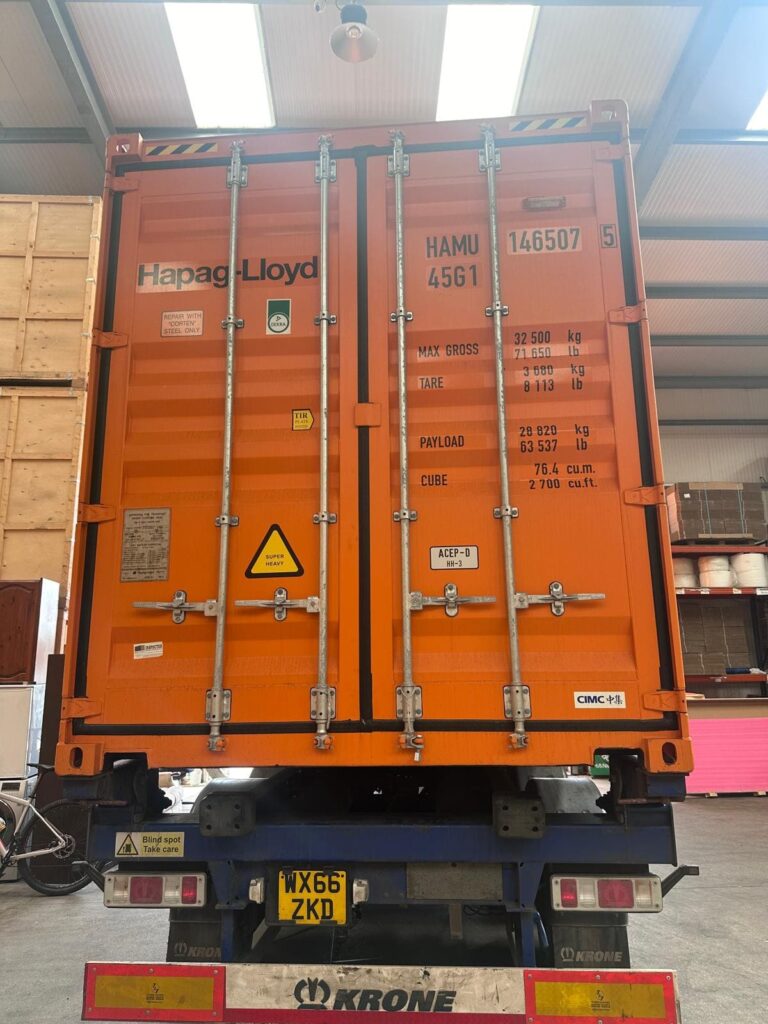
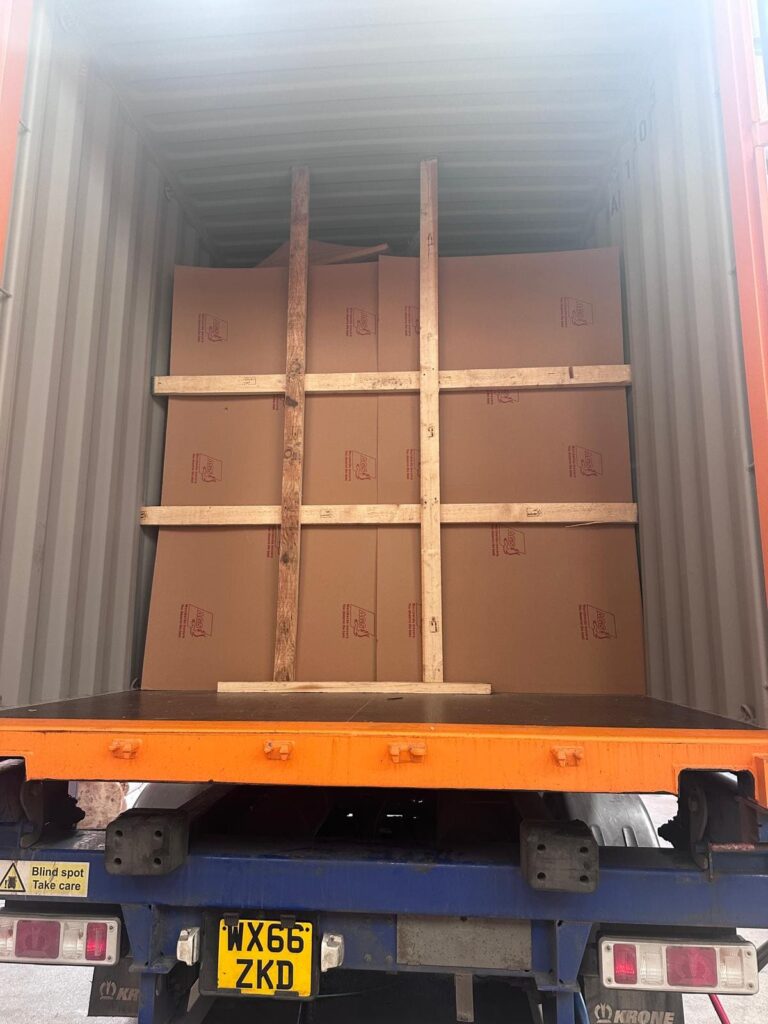
FCL means your household goods occupy a dedicated shipping container used exclusively for your move. The container is loaded at your UK collection point or at Trunk Logistics’ Essex depot, sealed, and does not open again until it reaches your destination address or the destination port. There is no consolidation stage, no other shipments share the space, and the container moves on the next available scheduled vessel once cleared for export.
FCL is used for larger household moves typically anything from a substantial one-bedroom property upwards, depending on what is being taken. It offers the most direct transit path, the fewest handling stages between UK and destination, and the greatest control over scheduling and delivery timing.
What is LCL (Less than Container Load)?
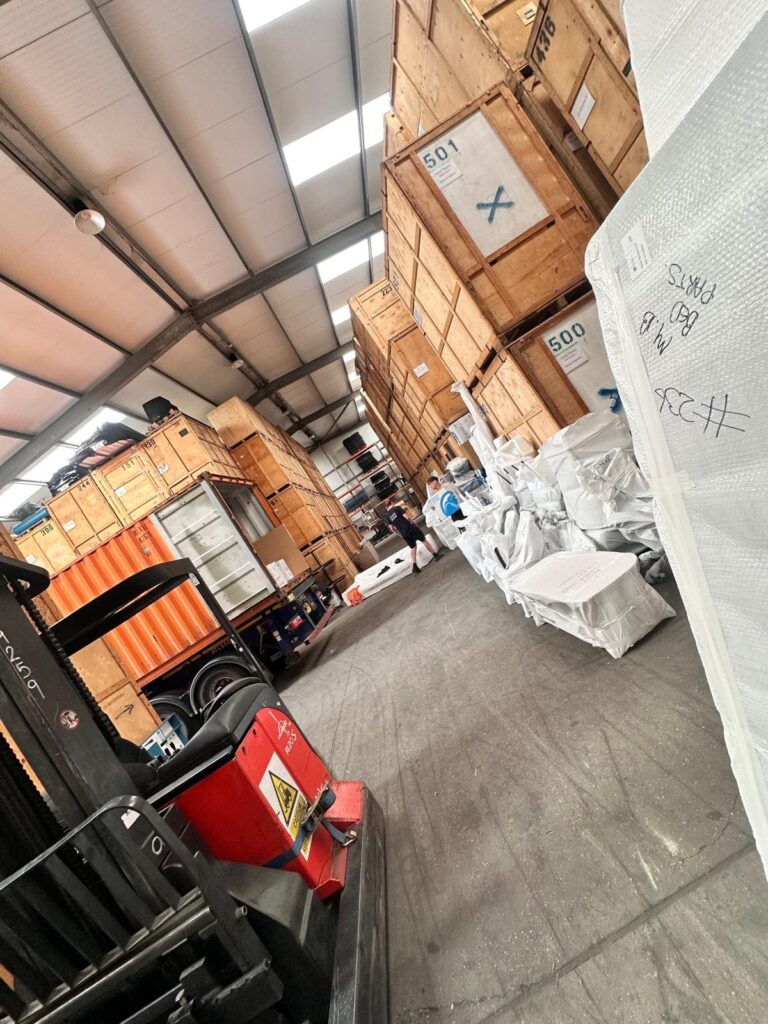
LCL, also referred to as groupage or shared container shipping, means your household goods share a container with other compatible shipments travelling to the same destination region. Your goods are professionally packed and crated, collected and brought to a consolidation warehouse, loaded alongside other shipments into a shared container, and then separated at a destination warehouse before final delivery.
LCL is used for smaller household moves where the volume does not justify a dedicated container. It is more cost-efficient for smaller shipments because you pay only for the space you use but it introduces additional handling stages at both origin and destination that FCL avoids entirely.
Are both FCL and LCL options safe and professionally managed?
Yes. Both FCL and LCL follow the same international removals standards for export packing, inventory control, sea freight transport, customs documentation and clearance, and coordinated overseas delivery. The difference between them is space allocation and transit structure not safety, professionalism, or the quality of how your goods are handled. Both are widely used, well-established methods for moving household goods internationally.
How transit times differ between FCL and LCL
Transit time is one of the most practically significant differences between FCL and LCL and it is not simply a matter of one being faster than the other. The structure of each method creates different timing profiles that need to be understood before a decision is made.
FCL transit timing
FCL shipments move on the next available scheduled vessel once loaded and cleared for export. Because there is no consolidation stage, the shipment departs as soon as vessel space is secured and export documentation is complete. At destination, the sealed container is discharged at port, passes through customs clearance, and is delivered directly to your address or held at the destination depot pending delivery scheduling.
The result is a relatively direct timeline from UK collection to overseas delivery, with timing controlled primarily by vessel schedules and customs clearance speed at destination.
LCL transit timing
LCL shipments introduce additional time at both ends of the journey. Before departure, your goods are held at a consolidation warehouse until enough compatible shipments have been collected to fill a container for your destination region. This wait can add days or weeks depending on the route and current shipping volumes. After arrival at destination, the container is discharged, taken to a deconsolidation warehouse, unpacked, and individual shipments are separated before customs clearance and delivery scheduling can begin.
The consolidation and deconsolidation stages are professionally managed and your goods remain tracked and documented throughout but they do extend the total door-to-door timeline compared to FCL on the same route.
What else affects delivery timing on both methods?
Regardless of container type, total delivery time is also affected by the distance from destination port to your final address, seasonal port congestion, customs clearance processing speed, and whether your property is ready to receive delivery on arrival. These variables are factored into your realistic delivery window when your move is planned during your survey. International moves are scheduled around delivery windows rather than exact arrival dates.
How to choose between FCL and LCL for your international move
The correct container option is determined by three confirmed factors: your measured shipment volume, how quickly you need delivery, and how you want to balance cost against transit structure. Until these are established through a professional survey, choosing between FCL and LCL is a guess, and guesses made at the booking stage create problems that become expensive to resolve during shipping.
When FCL is the right choice
FCL is typically the correct option when your shipment volume is large enough to fill most or all of a container, when delivery timing needs to be as direct and predictable as possible, when you want to minimise the number of handling stages between UK loading and overseas delivery, and when you are moving a full household rather than a partial or staged shipment. For moves of two bedrooms or more, FCL is most commonly the appropriate option though this depends on what is actually being taken, not on bedroom count alone.
The primary advantages of FCL are fewer handling stages, more direct transit, and greater scheduling control. The trade-off is higher base cost as you are paying for an entire container regardless of whether it is filled to capacity.
When LCL is the right choice
LCL is typically the correct option when your shipment volume is smaller, a studio, one-bedroom, or partial household where the volume does not justify the cost of a dedicated container. It is also the appropriate choice when cost efficiency is a higher priority than transit speed, and when your timeline can accommodate the consolidation and deconsolidation stages that LCL involves.
The primary advantage of LCL is cost proportionality as you pay only for the cubic metres your shipment occupies, which makes it meaningfully cheaper for smaller moves. The trade-offs are a longer and less direct transit timeline, additional handling stages at both ends, and less control over departure scheduling since consolidation depends on grouping compatible shipments together.
Why container choice must be based on measured volume
Room count and rough estimates are not a reliable basis for container decisions. A three-bedroom house being shipped partially with furniture only, no white goods, no garden, may suit LCL. A one-bedroom flat being shipped in full with specialist items may require FCL. The only way to determine the correct option accurately is through a professional survey that establishes your exact shipment volume in cubic metres, confirms your destination routing, and identifies any items that affect packing, handling, or customs requirements. This is what your survey establishes before any container space is reserved.
How container choice affects your international moving cost
Container type is one of the most significant cost variables in international removals but it does not operate in isolation. Volume, destination, and routing all interact with container choice to determine your total move cost.
How shipment volume drives cost
Volume is the primary cost factor in any international removal. It determines whether FCL or LCL is appropriate, how much container space is required, how much packing material and labour is needed, and what vehicle size is needed for UK collection. Because volume is the foundation of pricing, accurate volume measurement through a professional survey is what makes fixed pricing possible, as estimates based on room count or rough lists produce figures that change when the move is properly measured.
How FCL and LCL are priced differently
FCL is priced as a fixed container cost so you pay for the container regardless of how full it is. This makes FCL cost-effective when your volume is high enough to justify the container, and expensive when it is not. LCL is priced per cubic metre of space used, with additional charges for consolidation, deconsolidation, and destination warehouse handling. LCL pricing is cost-efficient for smaller shipments but the per-cubic-metre rate combined with handling charges means it becomes less competitive as shipment volume increases. At a certain point, FCL becomes the better value option even for moves that could technically fit in shared space.
What additional costs apply to each method
Both FCL and LCL include origin handling, sea freight, port charges at destination, customs clearance, and inland delivery. LCL adds consolidation warehouse handling at origin and deconsolidation warehouse handling at destination. These charges are sometimes excluded from headline LCL quotes and appear later as additional costs. FCL avoids these stages entirely. A quote comparison between FCL and LCL should always be made on a like-for-like door-to-door basis, with all handling stages included on both sides.
Why online estimates are unreliable for container decisions
Online calculators cannot establish actual shipment volume, verify property access conditions, account for destination-specific handling charges, or confirm the correct routing for your move. They produce a figure without measuring any of the variables that determine whether it is accurate. This routinely results in under-quoted prices that change once the move is properly assessed. This causes a problem that disproportionately affects LCL quotes where handling charges are most commonly omitted from initial estimates.
Frequently asked questions about FCL and LCL container shipping
What size containers are used for international household moves?
Standard sea freight containers used for household removals are 20-foot and 40-foot. A 20-foot container holds approximately 25–28 cubic metres of household goods. A 40-foot container holds approximately 55–60 cubic metres. Most full household FCL moves use a 20-foot container for smaller properties and a 40-foot for larger ones. The correct container size is confirmed by survey-measured volume and not estimated by room count.
Can fragile or high-value items be shipped in a shared container?
Yes, but they require the same export-grade packing used for FCL shipments such as specialist wrapping, crating where necessary, and correct inventory documentation. Fragile and high-value items are not treated differently in LCL from a packing standard perspective. The difference is that LCL introduces additional handling stages at consolidation and deconsolidation warehouses that FCL avoids. For particularly high-value or fragile collections, FCL minimises handling exposure and may be the more appropriate choice regardless of shipment volume.
What happens if my shipment does not fill the container?
On FCL moves, unused container space does not affect your shipment, your pricing, or your transit timeline, the container moves as booked regardless of fill level. Many FCL moves do not fill the container completely, and this is entirely normal. On LCL moves, you pay only for the cubic metres your shipment occupies, any unused space in the shared container is filled by other shipments and has no bearing on your costs or timeline.
Can I add items to my shipment after booking?
On FCL moves, minor volume increases can sometimes be accommodated if container space allows and this is discussed with your coordinator before the shipment is sealed. On LCL moves, adding items after the consolidation stage has been finalised is more complex and may affect your pricing and departure date. In both cases, the correct approach is to finalise your shipment inventory as accurately as possible at survey stage so additions after booking are the exception rather than the norm.
Do both FCL and LCL go through the same customs clearance process?
Yes. Both FCL and LCL shipments go through the same customs clearance process at destination. The container type does not affect customs requirements, documentation standards, or inspection risk. The same inventory accuracy, visa and residency documentation, and restricted item declaration requirements apply regardless of whether your goods are in a dedicated or shared container.
What is the most common mistake when choosing between FCL and LCL?
Choosing based on upfront cost alone without accounting for handling charges, transit structure, and total door-to-door timeline. LCL appears cheaper on a headline freight rate comparison but when consolidation, deconsolidation, and destination handling charges are included on a like-for-like basis, the cost difference narrows significantly as volume increases. The correct choice is always made on total door-to-door cost and delivery structure.
Get Your Fixed International Removal Quote
Rated ★4.5 on Google | ★4.8 on Trustpilot | 1,500+ Reviews | IAM Member
Ready to confirm your container option and get a fixed price? A Trunk Logistics specialist will measure your shipment, confirm whether FCL or LCL is right for your move, and give you a fixed all-inclusive door-to-door quote that covers every stage from UK collection to overseas delivery.
Our team will contact you to arrange a survey and confirm your shipment volume, container type, routing, and fixed cost before anything is booked.
Message us if you need quick advice on your planned international move